
Engineered to meet Indonesian tropical climate demands (BMKG seismic compliance & High R-Value thermal insulation), our factory-built expandable container homes offer rapid deployment within 10 minutes to 7 days. Explore our top-tier recommended models below:
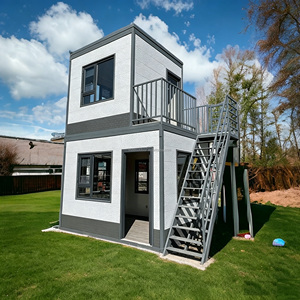
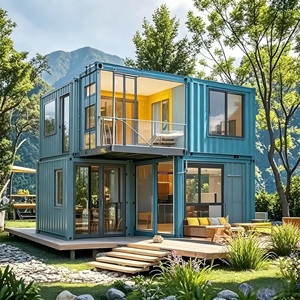
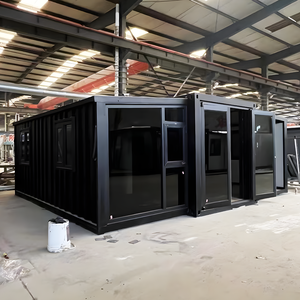
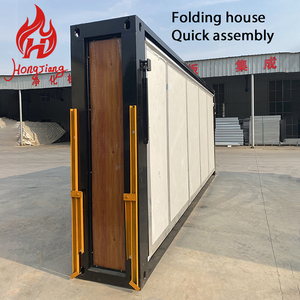
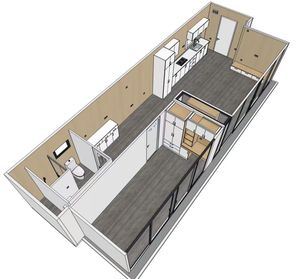
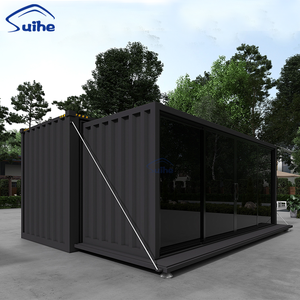
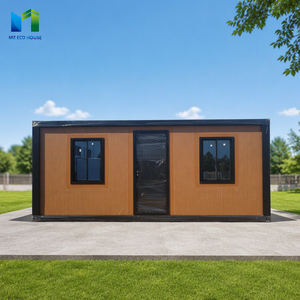
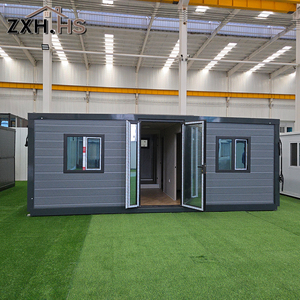
The Special Capital Region of Jakarta (DKI Jakarta) and its surrounding industrial periphery—Greater Jabodetabek (Jakarta, Bogor, Depok, Tangerang, Bekasi)—are undergoing an unprecedented shift toward modern off-site modular construction. Driven by soaring land acquisition costs, stringent local municipal building regulations (Persetujuan Bangunan Gedung / PBG), and urgent timelines for commercial and infrastructure projects, traditional brick-and-mortar building methods are increasingly viewed as high-risk, cost-inefficient, and labor-intensive.
In this hyper-competitive market, sourcing directly from verified China expandable container manufacturers presents a decisive strategic advantage. Chinese manufacturers dominate global prefabricated steel architecture due to automated CNC fabrication lines, massive economies of scale, integrated supply chains, and compliance with international structural engineering codes (ISO, CE, AISC). Expandable container houses—specifically designed to fold down to a standard 20ft or 40ft ISO shipping dimension during transport and expand by 300% on-site—drastically reduce international ocean freight tariffs per square meter delivered to Tanjung Priok Port.
Unlike standard flat-pack containers that require days of manual panel assembly, expandable container units incorporate heavy-duty internal steel hinges and sliding double-wing mechanisms. Over 80% of internal mechanical, electrical, and plumbing (MEP) systems, along with bathroom fixtures, flooring, and ceiling insulation, are fully completed at the Chinese factory before shipping. Once unladed at your Jakarta site, a single crane and a team of three local installers can fully expand and seal the structure within 10 to 30 minutes, saving up to 70% in local field labor overhead.
Deploying prefabricated container structures in Jakarta requires rigorous engineering adaptations to resist the region’s extreme equatorial climate—characterized by high ambient humidity (averaging 80%-90%), intense year-round solar radiation, heavy seasonal monsoon rainfall (over 300mm/month during peak periods), and seismic activity inherent to Java's tectonic location.
Leading China manufacturers utilize cold-formed Q235B and Q355B structural steel chassis, hot-dip galvanized with a minimum zinc coating thickness of 120g/m² to 275g/m². Frame profiles are welded via robotic MIG processes to guarantee sub-millimeter (<1mm) tolerances. To survive North Jakarta’s coastal saline winds (Tanjung Priok, PIK, Ancol), the external steel envelope receives a 4-layer marine-grade epoxy primer and polyurethane topcoat (C3/C4 anti-corrosion classification according to ISO 12944), preventing rust degradation for over 25 years.
Uninsulated metal containers transform into heat traps under Jakarta's average 32°C afternoon sun. High-gain expandable containers employ tongue-and-groove polyurethane foam (PUF) or high-density Rockwool sandwich wall panels (ranging from 50mm to 75mm thickness). PUF cores deliver a thermal conductivity coefficient as low as λ = 0.022 W/m·K (providing R-25 equivalency), reducing interior air-conditioning power consumption by up to 30% compared to conventional uninsulated concrete blocks.
The structural joint lines of expanding side-wings feature double-layer EPDM rubber weatherstrips combined with integrated internal drip gutters. Roof structures are sloped at 2-5 degrees with hidden perimeter water channels capable of discharging monsoon downpours exceeding 100mm/hour. Furthermore, the flexible structural steel frame acts as a seismic damper, absorbing lateral forces during earthquake tremors up to Richter Magnitude 8 without structural collapse.
The versatility of expandable containers makes them the preferred choice for diverse commercial, industrial, and municipal projects across Indonesia:
In high-density commercial zones such as Sudirman Central Business District (SCBD), Pantai Indah Kapuk 2 (PIK 2), BSD City, and Kemang, developers utilize 20ft and 40ft expandable units as modular drive-thru cafes, boutique retail pop-ups, and experiential brand showrooms. Units can be deployed on leased urban lots without permanent foundation footprints, enabling rapid ROI and easy relocation when land leases expire.
Major Indonesian infrastructure contractors and resource exploration firms based in Jakarta deploy multi-bedroom expandable containers to remote site camps across Sumatra, Kalimantan, and Sulawesi. Folded flat into standard ocean containers, up to 4 complete units can fit into a single 40ft High Cube container, significantly reducing logistics transport costs across island sea routes.
For boutique resort operators in Kepulauan Seribu (Thousand Islands), Puncak Highlands, and nearby West Java tourism corridors, luxury expandable container villas offer high-end hotel amenities—including glass curtain walls, composite wood cladding, and ensuite bathrooms—installed without heavy machinery or environmental damage to delicate ecosystems.
In flood-prone low-lying districts along the Ciliwung River basin and North Jakarta land subsidence zones, expandable container homes elevated on steel pile foundations provide safe, moisture-proof, and easily cleanable housing solutions during emergency seasonal displacement events.
Several key macro economic trends are accelerating the adoption of Chinese prefabricated expandable container technology across Indonesia's construction landscape:
A comparative evaluation of structural performance parameters between Expandable Containers, Flat-Pack Containers, and Traditional Masonry Construction in the Jakarta market:
| Evaluation Criterion | Expandable Container House | Standard Flat-Pack Container | Traditional Concrete / Brick |
|---|---|---|---|
| On-Site Assembly Time | 10 - 30 Minutes per unit | 2 - 4 Hours per unit | 3 - 6 Months per structure |
| Factory Completion Level | 85%+ (Pre-fitted MEP & Bathrooms) | 60% (Structural panels only) | 0% (Built entirely on-site) |
| Seismic Resistance (Richter) | Up to Grade 8 (Flexible Steel Framework) | Up to Grade 7 | Vulnerable to shear wall cracking |
| Ocean Freight Efficiency | High (Folds into standard 20ft/40ft ISO dimensions) | High (Bundled 4-in-1 flat pack) | N/A (Raw material shipping) |
| Thermal Insulation (R-Value) | R-20 to R-25 (PUF Core Panels) | R-10 to R-15 (EPS Panels) | R-4 (Standard Masonry Block) |
| Relocability & Re-sale Value | 100% Relocatable; high asset retention | Relocatable with disassembly | Demolition required (Zero recovery) |
Successfully importing expandable containers from China factories to your site in Jakarta requires strict compliance with Indonesian import procedures and maritime trade routes:
Direct container vessel services operate weekly from key Chinese manufacturing ports—including Shanghai, Ningbo, Qingdao, and Foshan (via Nansha/Shenzhen)—directly to Tanjung Priok Port (Jakarta, North Java). Average ocean transit times range from 7 to 12 days, ensuring predictable supply chain scheduling for large-scale developments.
Prefabricated steel structures fall under Harmonized System (HS) Code 9406.90.90. Under the ASEAN-China Free Trade Agreement (ACFTA), Indonesian importers presenting a valid Certificate of Origin (Form E) issued by China Customs can claim 0% Import Duty (Bea Masuk), subject to standard Indonesian Value Added Tax (PPN 11%) and Income Tax (PPh Article 22).
Top Chinese manufacturers customize internal electrical systems prior to shipment to match Indonesia's Perusahaan Listrik Negara (PLN) standard grid parameters: 220V single-phase / 380V three-phase at 50Hz, utilizing SNI-compliant flame-retardant copper conduits and Type C/F socket outlets.
Our partner manufacturing facilities in China combine advanced industrial robotics with strict quality assurance systems to deliver certified prefabricated structures engineered for lifetime reliability:
Automated fiber laser cutters and CNC hydraulic folding machines maintain dimensional tolerances under <1mm, ensuring exact joint alignment and zero air leaks when expanded on-site.
Every expandable unit undergoes a rigorous Factory Acceptance Test (FAT)—including 2-hour water deluge leak testing and multi-cycle hinge expansion tests—prior to export packing.
From double-glazed Low-E tempered glass wall panels to luxury composite bamboo interior trims, structures are custom-designed to align with local project branding and architectural blueprints.
Connect directly with our senior engineering team to receive customized floor plans, structural CAD drawings, landed cost quotes for Tanjung Priok Port, and factory direct pricing for your commercial or industrial development.
Inquire Now