
Direct factory supply for Greek resorts, residential developers, and industrial infrastructure projects. Built with hot-dip galvanized steel frames and high R-value insulation panels.
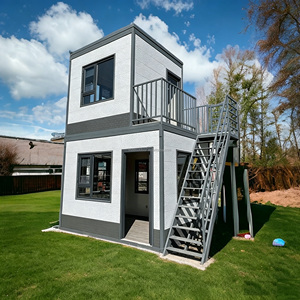
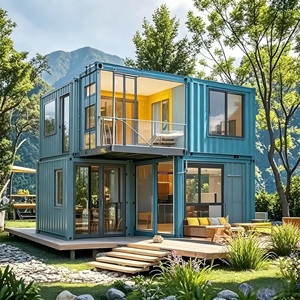
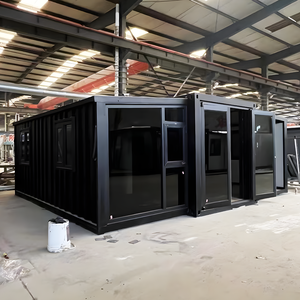
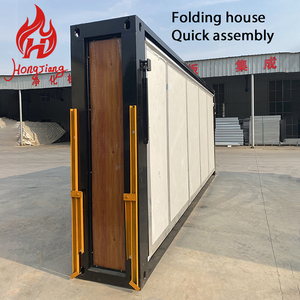
An in-depth analysis of thermal dynamics, coastal anti-corrosion chemistry, and seismic resilience required for modular structural investments in Greece.
Greece sits at the boundary of the African and Eurasian tectonic plates, making it the most seismically active country in Europe. Traditional masonry construction is prone to structural fatigue under lateral shear stresses. Our expandable container units utilize light gauge high-tensile steel frames (Q235B/Q355B cold-formed structural profiles) engineered strictly in accordance with EN 1998-1 (Eurocode 8). The dynamic hinged joint connections of our expandable wings absorb seismic energy through ductile micro-deformations, completely mitigating catastrophic structural failures up to Seismic Zone 3 (PGA > 0.36g).
Under the Hellenic Energy Performance of Buildings Regulation (KENAK), new modular structures must adhere to strict U-value thermal thresholds to combat intense summer solar irradiation. Our factory integrates closed-cell Polyurethane (PU) and high-density Rockwool core sandwich panels ($40\text{ kg/m}^3$ to $100\text{ kg/m}^3$) with thermal conductivity ratings as low as $\lambda = 0.022\text{ W/mK}$. The exterior reflects up to 85% of infrared solar radiation through fluorocarbon (PVDF) architectural white finishes, preserving indoor climate stability in Crete, Mykonos, and Santorini while reducing HVAC energy loads by up to 35%.
Island deployment in the Aegean and Ionian Seas exposes structural steel to intense marine atmospheric humidity, salt spray, and atmospheric chlorides. Standard industrial paint systems deteriorate within 24 months. Our factory enforces a multi-tier protective coating regime complying with ISO 12944-2 Category C5-M (Very High Marine Corrosion). Steel members undergo hot-dip galvanization ($275\text{ g/m}^2$ zinc coating), followed by an epoxy zinc-rich primer and a polyurethane topcoat, guaranteeing structural integrity over a 25-year service lifecycle without rust penetration.
Unlike fixed concrete constructions requiring multi-year permitting under the Greek General Building Code (NOK), expandable container houses supplied by our direct factory fall under streamlined temporary, semi-permanent, or modular residential classification. Delivered fully folded via standard 40ft High Cube shipping containers to major Greek ports (Piraeus, Thessaloniki, Heraklion), our units can be transported via local island ferries and deployed on simple concrete piers or screw pile foundations in under 4 hours per unit, drastically minimizing local labor overheads and bypass island construction bans during high tourist seasons.
Purpose-built modular configurations tailored to Greece’s distinct regional economic sectors, geography, and environmental microclimates.
Target Regions: Mykonos, Santorini, Paros, Naxos, Milos.
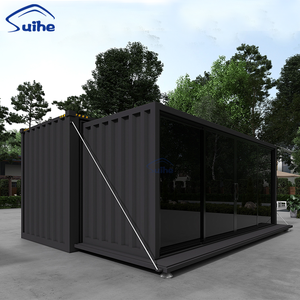
In high-end island tourist hubs where traditional masonry construction is prohibitively expensive and restricted during summer months, our 40ft dual-side expandable container units serve as turnkey eco-villas. Fitted with whitewashed exterior facades, natural wooden decking, double-glazed panoramic Low-E glass walls, and interior luxury suites, these units allow resort operators to expand guest capacity rapidly before peak season.
Target Regions: Peloponnese (Kalamata), Thessaly, Crete (Chania/Heraklion).
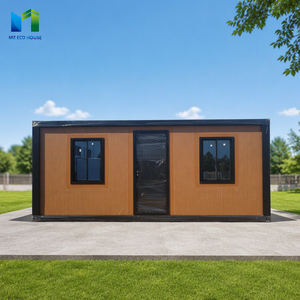
For olive oil estates, wineries, and agricultural operations requiring seasonal staff accommodation or tasting rooms. Our 20ft flat-pack and folding expandable models offer hygienic, fire-resistant, thermal-insulated living quarters. Units can be integrated with off-grid rooftop photovoltaic arrays and graywater recycling units, satisfying environmental sustainability goals.
Target Regions: Piraeus Port, Thessaloniki Maritime Zone, Patras, Volos.
Greece’s strategic position as the primary maritime gateway to Southern Europe demands rapid port administration expansion. Our heavy-duty container units serve as modular site offices, customs clearance booths, security checkpoints, and worker breakrooms. Designed to withstand constant heavy vehicle vibration and industrial marine atmospheric conditions.
Target Regions: Attica, Evia, Rhodes, Northern Greece.
In response to seasonal Mediterranean forest fire risks, municipal authorities require rapidly deployable emergency shelter solutions. Our hydraulic expandable container houses compress to standard shipping dimensions for rapid transport via flatbed trucks, unfolding into fully operational 3-bedroom relief homes equipped with electrical distribution panels, plumbing lines, and sanitary facilities within 30 minutes of site arrival.
How technical innovation, EU green energy mandates, and shifting economic landscapes are accelerating the transition to prefabricated container structures.
With Greece targeting strict carbon reduction goals under the EU "Fit for 55" framework, traditional concrete manufacturing—responsible for substantial $\text{CO}_2$ emissions—is facing mounting regulatory taxation. Factory-fabricated modular containers reduce raw material waste by 90% and lower embedded building carbon footprints by over 45% compared to reinforced concrete construction.
Greek island economies face severe shortages of skilled construction labor during non-tourist months, driving local daily labor rates to record highs. Off-site pre-fitted expandable containers shift 85% of the manufacturing workload to our precision automated factory floor, requiring only basic mechanical assembly on site.
Remote island sites and mountainous regions in Greece often lack immediate grid electrical connections or sewage networks. Modern expandable containers engineered by our factory feature integrated wiring conduits, pre-plumbed blackwater/graywater ports, and reinforced structural roof trusses optimized for direct mounting of solar panels and battery storage banks.
Comparing our automated factory manufacturing standards against conventional site-built structures and standard low-cost market alternatives.
| Performance Metrics | Our Factory Expandable Series | Low-Cost Modular Alternatives | Traditional Concrete Build |
|---|---|---|---|
| Structural Life Expectancy | 25+ Years (Galvanized Q355B Steel) | 8 - 10 Years (Non-Galvanized) | 50+ Years (High Maintenance) |
| Seismic Resistance (Eurocode 8) | Grade 8 Tectonic Absorbing Ductile Frame | Grade 5 Uncertified Joints | Grade 7 Rigid (Risk of Cracking) |
| Anti-Corrosion System | ISO 12944 C5-M Marine Coating System | Single-Layer Alkyd Paint (C2) | Plaster & Paint (Chalking/Peeling) |
| Thermal Insulation (U-Value) | 0.22 - 0.28 W/m²K (PU Core) | > 0.55 W/m²K (Thin EPS) | Varies (Requires Added Insulation) |
| Deployment Speed | 3 Hours Unfolding Time / Fully Fitted | 2 - 3 Days Assembly | 12 - 18 Months Construction |
| Factory Precision Tolerance | < 1.0mm Robotic Laser Cutting & Welding | 3.0mm - 5.0mm Manual Cutting | Variable On-Site Margins |
End-to-end quality control, ISO certified manufacturing processes, and specialized ocean freight packing engineered for Mediterranean transit.
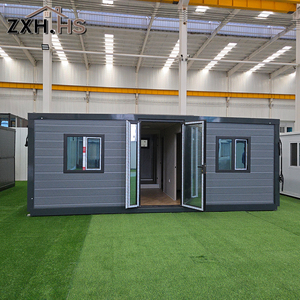
Our 30,000+ $\text{m}^2$ manufacturing facility utilizes fully automated laser cutting, robotic welding arms, and cold-roll section forming machinery. Fabrication tolerances are strictly held under 1.0mm, ensuring that when expandable modules unfold on remote Greek sites, all hinged gaskets, lock mechanisms, and weather-seal channels align perfectly without water leakage risks.
Maritime shipping from our factory to Piraeus or Thessaloniki involves saltwater exposure during transit. We wrap every folded expandable container module in heavy-duty shrink-wrapped weather-seal film, reinforced with steel corner protectors and bottom transport skid frames, preventing damage during container crane hoisting and ocean freight passage.
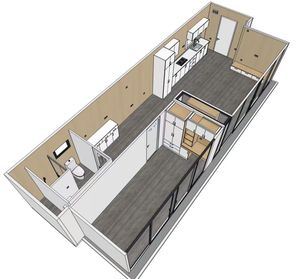
Units leave our factory floor fully wired to EU electrical specifications (230V/50Hz CE certified cabling, breakers, sockets, and LED lighting). Bathrooms are pre-fitted with ceramic toilets, shower enclosures, and vanity units, while kitchens feature integrated cabinetry and sink units—drastically reducing local trade hiring needs in Greece.
Addressing essential technical, legal, logistical, and financial inquiries regarding factory-direct import of expandable containers into Greece.
We routinely ship containerized modular units via main ocean shipping lines (e.g., COSCO, MSC, Maersk) directly to Piraeus Port (Attica) and Thessaloniki Port (Northern Greece). From Piraeus, units are easily transferred onto domestic Hellenic Seaways or Blue Star Ferries for direct transport to island destinations like Crete, Rhodes, Mykonos, or Syros.
Our expandable container units feature a flexible high-tensile structural steel frame (Q355B grade) connected by heavy-duty ductile steel hinges. Unlike rigid brick or unreinforced concrete structures that crack during earth tremors, our steel frame distributes lateral kinetic forces through elastic deflection, meeting and exceeding EN 1998-1 structural safety compliance for Greek Seismic Zones 1, 2, and 3.
We offer custom insulation cores tailored to Greek microclimates. Our premium package includes 75mm to 100mm closed-cell Polyurethane (PU) or high-density Rockwool sandwich wall/roof panels ($\text{U-value} \le 0.24\text{ W/m}^2\text{K}$), paired with double-glazed, argon-filled Low-E aluminum windows. This maintains comfortable internal temperatures during 40°C+ summer heatwaves in Athens or cool winter nights in Northern Greece.
Yes. All structural steel components undergo hot-dip galvanization ($275\text{ g/m}^2$) followed by a 3-coat marine polyurethane painting system rated to ISO 12944 C5-M standards. Exposed fasteners, hinges, and corner castings are fabricated from grade 304 or 316 stainless steel to prevent rust streaks in high-salinity island environments.
Because expandable containers feature a self-supporting rigid chassis, full concrete slab foundations are rarely necessary. They can be installed on simple concrete footings, perimeter strip foundations, ground screws, or leveled gravel beds with concrete blocks at structural load points. This minimizes site disturbance and preserves natural landscapes in protected Greek agricultural or coastal zones.
Standard factory fabrication takes 15 to 20 business days depending on order volume and interior customization. Ocean transit from our port to Piraeus or Thessaloniki typically takes 22 to 28 days. Total turnaround time from deposit confirmation to port arrival in Greece is generally within 45 to 55 days.
Planning a resort project, commercial development, or personal villa extension in Greece? Speak directly with our structural engineering team to receive customized floor plans, Eurocode calculation sheets, and landed FOB/CIF Piraeus price quotes.