
Pre-engineered structural cabins designed for rapid deployment, extreme thermal resistance, and luxury living in Middle Eastern climates.
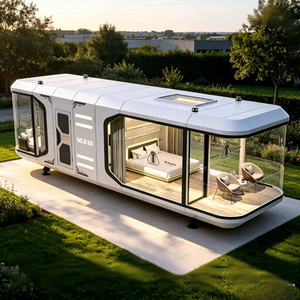
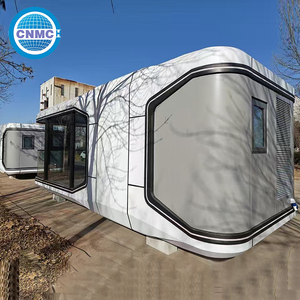
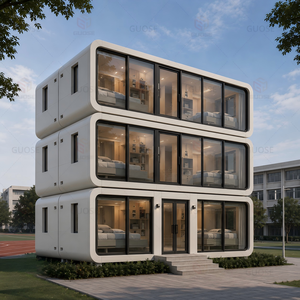
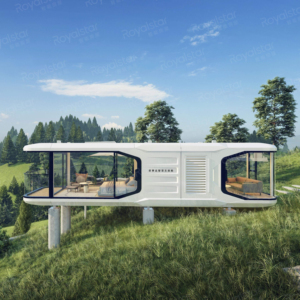
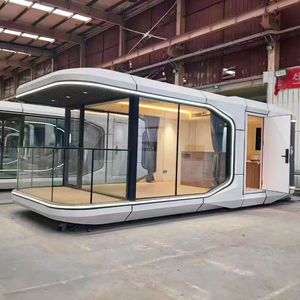
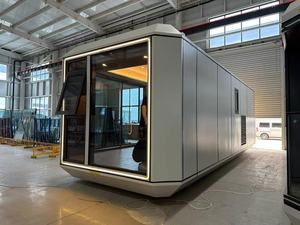
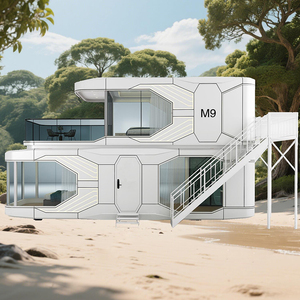
As Qatar advances towards the ambitious milestones outlined in the Qatar National Vision 2030, the construction and real estate landscape in Doha is undergoing a paradigm shift. Real estate developers, hospitality conglomerates, and governmental procurement managers are increasingly bypassing traditional wet-construction methods in favor of high-precision, factory-built modular architecture. Among these innovations, space capsule houses have emerged as the premier structural solution for luxury glamping, eco-resort expansions, coastal pop-up commercial hubs, and high-end private villas across the State of Qatar.
Operating in Doha’s hyper-arid Gulf climate requires structural engineering that goes far beyond aesthetic futuristic design. Ambient summer temperatures regularly exceed 45°C, accompanied by intense solar radiation, high atmospheric salinity near the coast, and severe dust storms (Shamal winds). Consequently, importing or specifying space capsule structures demands strict adherence to structural integrity, thermal envelope performance, and non-corrosive material science. This comprehensive guide serves as an industrial whitepaper for procurement heads and project developers in Doha evaluating leading capsule house manufacturers and factories.
Information Gain Insight: Unlike standard steel containers or temporary porta-cabins, precision-engineered space capsules feature a decoupled dual-shell structural design. The outer fluorocarbon-coated aluminum skin reflects 95% of solar radiation, while an injected polyurethane core guarantees low heat transfer rates (U-value < 0.22 W/m²K), reducing summer HVAC power demands by up to 35% in Qatar.
Deploying prefabricated structures within the Municipality of Doha, Lusail City, or rural eco-tourism zones like Khor Al Adaid (The Inland Sea) necessitates total compliance with local engineering codes. Qualified manufacturers design modules off-site using state-of-the-art Computer Numerical Control (CNC) laser cutting and robotic welding, eliminating human error and ensuring millimeter-accurate assembly.
Heavy-duty Q355 hot-dip galvanized structural steel frames withstand coastal air salinity in areas like West Bay Lagoon and Pearl-Qatar without oxidation.
High-density (45kg/m³) fire-retardant Polyurethane (PUF) insulation layers eliminate thermal bridging, maintaining cool indoor ambient temperatures in extreme heat.
Double and triple-glazed tempered glass units with Low-Emissivity coatings and argon gas fill effectively block solar heat gain and destructive UV rays.
The versatility of prefabricated capsule houses allows commercial operators and land planners in Qatar to monetize land without embarking on multi-year, disruptive civil construction projects. Below are the prominent localized deployment strategies:
Development in sensitive environmental zones like Qatar’s southern sand dunes requires minimal site disruption. Capsule houses are delivered pre-assembled and placed on minimal strip foundations or ground screws. Their autonomous off-grid potential—supporting solar PV arrays and greywater recycling—makes them ideal for eco-luxury hospitality operators catering to international tourists seeking luxury desert experiences.
As Lusail expands its entertainment districts, modular space capsules serve as high-end pop-up retail kiosks, specialty coffee shops, and VIP lounge suites. The sleek, futuristic aesthetics naturally draw foot traffic while meeting strict aesthetic guidelines mandated by local master developers.
Hoteliers in Doha are leveraging modular space capsules to expand room inventories dynamically ahead of major international conferences and sports events. Units can be installed on hotel grounds or beachfront property within days, offering guests panoramic views of the Persian Gulf through curved panoramic skylights.
In industrial hubs such as Ras Laffan and Mesaieed, project executives and visiting engineering consultants require accommodation far superior to traditional site offices. Fire-rated, acoustically insulated space capsules provide quiet, comfortable living spaces impervious to external industrial noise and harsh environments.
Our manufacturing facilities operate under strict ISO 9001, ISO 14001, and CE international quality frameworks. By centralizing 85% to 90% of the build process inside factory-controlled conditions, we eliminate common construction defects caused by variable on-site weather, material degradation, and skilled labor shortages.
Structural Reliability Guarantee: Every capsule unit undergoes rigorous hydrostatic rain testing, structural flex testing, and electrical circuit integrity checks prior to ocean freight packaging. Structural frames are certified to withstand 150 km/h wind loads—exceeding maximum recorded wind speeds in Doha.
For procurement officers assessing return on investment (ROI) and project lifecycle costs, the following matrix compares factory-produced space capsule houses against traditional reinforced concrete construction and standard porta-cabins in the Doha market:
| Evaluation Criteria | Factory Space Capsule | Traditional Concrete Build | Standard Steel Portacabin |
|---|---|---|---|
| On-Site Build Duration | 7 – 10 Days (Plug & Play) | 8 – 14 Months | 3 – 5 Days |
| Service Life Expectancy | 25+ Years | 50+ Years | 5 – 8 Years |
| Thermal Core Performance | R-25 to R-30 (PUF Core) | Varies (Requires insulation layer) | R-8 to R-12 (EPS Core) |
| Structural Wind Load | Up to 150 km/h | High Structural Load | Up to 90 km/h |
| Relocation Capability | 100% Mobile & Modular | Permanent (Demolition needed) | Mobile but structurally weak |
| Smart Home Integration | Pre-wired IoT / Voice Command | Manual Retrofitting Required | Basic Electrical Wiring |
| Aesthetic Value | Futuristic Panoramic Glass Panel | Traditional Blockwork | Utilitarian Corrugated Box |
Logistics execution from factory floor to installation site in Qatar is managed through established maritime freight corridors. Capsules are engineered to conform to standard international shipping dimensions or shipped via specialized 40ft Flat-Rack containers directly to Hamad Port, Doha.
Upon arrival at Hamad Port, customs clearance is facilitated using complete mill test certificates, structural engineering calculations, and Kahramaa-compliant electrical schematics provided by our technical desk. Transportation to site is completed via standard flatbed trailers. Once on site, a standard mobile crane lowers the capsule onto pre-aligned concrete pads or steel footing piers. Plumbers and electricians simply connect the single-point inlet/outlet utility connections to local infrastructure or off-grid storage tanks—achieving occupancy within hours of delivery.
Our space capsules feature an advanced thermal envelope utilizing 100mm high-density polyurethane injection core insulation combined with air-gap thermal breaks. The exterior skin is engineered with aircraft-grade fluorocarbon aluminum panels that reflect solar heat. Windows utilize Low-E argon-filled double glass, ensuring interior cooling systems maintain 21°C easily with minimal energy draw.
Yes. All internal wiring, circuit breakers, and distribution boards are pre-configured to match GCC electrical standards (240V, 50Hz single-phase or three-phase systems). Cabling is flame-retardant and housed within protective conduits, fully prepared for Kahramaa grid inspection or high-capacity generator connection.
Capsule houses require significantly lighter foundation work than concrete structures. Typically, 4 to 6 reinforced concrete pads positioned under structural lifting points or simple ground screw anchors are sufficient. This drastically reduces site preparation costs and preserves the original terrain.
Absolutely. We offer tailored interior packages including keycard smart lock systems, automated curtain controls, integrated voice control hubs, luxury rain showers, custom vanity suites, and premium E0-grade interior timber paneling designed to match luxury hotel brand standards.
Factory production typically takes 20 to 30 days depending on customization specifications. Maritime transit from factory ports to Hamad Port, Doha generally requires 18 to 25 days. Overall project lead times from order sign-off to site arrival range between 45 and 60 days.
Capsules feature automotive-grade EPDM double-sealing gaskets on all exterior doors, windows, and structural joints. Additionally, HVAC intakes are outfitted with multi-stage HEPA filtration units that trap fine sand particles, keeping indoor air clean during severe Shamal sandstorms.
Partner with an established manufacturer of prefabricated space capsule houses. Contact our engineering desk today for CAD layouts, floor plans, thermal test reports, and landed shipping quotes for Doha.
Get Catalog