
Explore our factory-engineered structural insulated panels, expandable mobile units, and specialized thermal enclosures certified for international deployment.
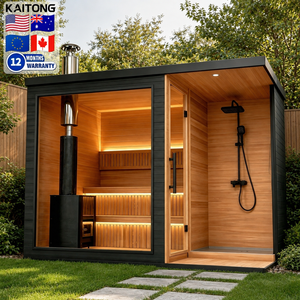
Combinaison 2-6 person traditional Finnish electric hot rock sauna unit with insulated timber core and integrated shower system.
Send an Inquiry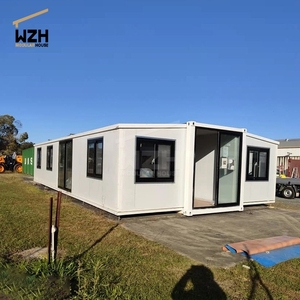
72 Sqm modular mobile layout equipped with PUF insulated wall panels, full kitchen, integrated bath, and high seismic resilience.
Send an Inquiry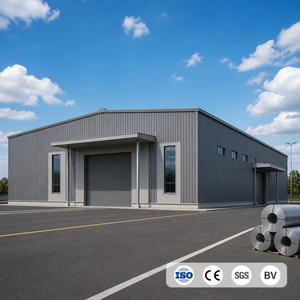
Heavy-duty equipment storage warehouse featuring sandwich panel cladding, engineered wind load resistance, and fast bolt-assembly.
Send an Inquiry
Aerodynamic outdoor cabin featuring thermal break structural insulation, panoramic glass envelope, and rapid plug-and-play setup.
Send an Inquiry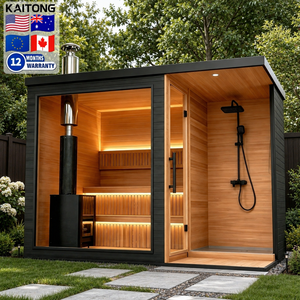
Architectural wood-fired sauna module built with heat-retaining insulated double-wall timber construction and sealed shower unit.
Send an Inquiry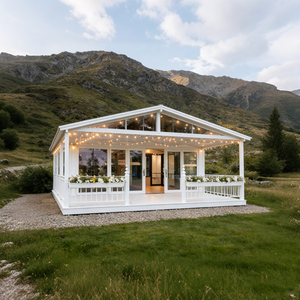
Multi-bedroom expandable container dwelling designed with high-density polyurethane sandwich panels for extreme climate control.
Send an Inquiry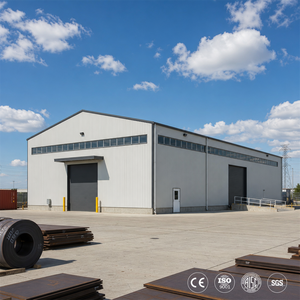
Turnkey industrial facility engineered with high R-value insulated roof and wall paneling for climate-controlled manufacturing.
Send an Inquiry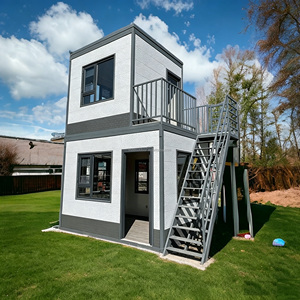
ISO-compliant site office module engineered with pre-fitted insulated panels, concealed wiring, and intermodular stackability.
Send an InquiryAs an internationally recognized manufacturer and exporter, our Hyderabad-based facility at IDA Jeedimetla combines advanced material science with precision structural engineering.
Every insulated panel and structural framing component is produced utilizing automated CNC machinery achieving micro-tolerances under 1 mm. This eliminates joint gaps, thermal bridging, and on-site alignment rework.
We utilize rigid Polyurethane (PUF) and Polyisocyanurate (PIR) cores with densities ranging from 40 to 48 kg/m³, delivering superior thermal resistance (λ ≤ 0.022 W/m·K) and continuous structural shear strength.
Engineered for harsh industrial and coastal deployments, our panels feature hot-dip galvanized steel facings (AZ150) coated with PVDF/HDP resins, capable of withstanding wind loads up to 150 km/h and 25+ years of operational service.
The modern architectural and industrial sector is experiencing a paradigm shift driven by stringent decarbonization mandates, accelerating energy costs, and the requirement for rapid offsite deployment. Structural Insulated Panels (SIPs), Polyisocyanurate (PIR), and Polyurethane (PUF) sandwich panels stand at the nexus of this transformation. As a verified supplier and exporter, our manufacturing standard integrates rigorous material thermodynamics, automated continuous lamination, and airtight joint engineering to resolve complex structural and thermal challenges.
The core thermal efficiency of an insulated panel is fundamentally determined by the molecular structure of its cellular core. Standard Polyurethane (PUF) is produced via the exothermic reaction of polyols and methylene diphenyl diisocyanate (MDI), yielding a polyurethane linkage with excellent thermal isolation characteristics. However, advanced procurement specs increasingly demand Polyisocyanurate (PIR) formulations.
PIR technology introduces an elevated index of MDI, triggering trimerization reactions at elevated temperatures to form highly stable cyclic isocyanurate rings. This chemical matrix enhances thermal resistance to structural degradation, yielding superior fire performance (B-s1, d0 classification under EN 13501-1) and maintaining an extremely low thermal conductivity index (λ = 0.020 - 0.022 W/m·K). By minimizing radiative, convective, and conductive heat transfer, PIR core panels significantly reduce baseline HVAC power requirements for large-scale cold chain warehouses, cleanrooms, and commercial modular shelters.
| Performance Specification | Polyurethane (PUF) Core | Polyisocyanurate (PIR) Core | Structural Mineral Wool |
|---|---|---|---|
| Thermal Conductivity (W/m·K) | 0.022 - 0.024 | 0.020 - 0.022 | 0.038 - 0.044 |
| Core Density Range | 40 kg/m³ ± 2 | 42 - 48 kg/m³ | 100 - 140 kg/m³ |
| Fire Reaction Rating (EN 13501-1) | Class B2 / B3 | Class B-s1, d0 | Class A1 Non-Combustible |
| Closed Cell Content | > 93% | > 95% | Open Fibrous Matrix |
| Water Vapor Permeability | Impermeable (Vapor Tight) | Impermeable (Vapor Tight) | Permeable (Requires Barrier) |
Thermal insulation value is heavily compromised if panel-to-panel micro-gaps allow infiltration of humid ambient air. Air movement brings moisture, which condenses inside the core, causing icing in sub-zero applications and destroying structural integrity. Our advanced panel engineering employs a double tongue-and-groove joint profile integrated with factory-applied labyrinth gaskets or secondary sealant grooves.
When locked together under tension, these joints form a continuous vapor-tight barrier. For cold storage and sub-zero freezer installations operating between -25°C and -40°C, this hermetic barrier stops thermal bridging entirely, prevents frost accumulation, and protects internal steel skins from galvanic corrosion.
Industry research highlights four macro-trends governing international procurement strategies across infrastructure, logistics, and industrial EPC contracts.
Enterprise buyers are transitioning from standard off-the-shelf panel purchases to fully integrated Building Information Modeling (BIM) solutions. Panels are pre-cut at the factory with CNC precision for exact window, door, and utility penetrations. This offsite pre-fitting methodology reduces jobsite waste to near zero, accelerates installation speeds by up to 70%, and shortens project schedules to 7-10 days.
Global environmental regulations strictly ban legacy HCFC and HFC blowing agents due to their high Global Warming Potential (GWP). Forward-thinking procurement officers require zero-ODP (Ozone Depletion Potential) and ultra-low GWP blowing chemistry. Our panels utilize cyclopentane technology, providing an environmentally responsible lifecycle compliant with LEED, BREEAM, and international green building codes.
Industrial applications—such as chemical production plants, coastal cold stores, and agricultural processing facilities—require superior anti-corrosive protection. The market is shifting toward specialized metallic substrates like Zinc-Aluminum-Magnesium alloy (ZAM) paired with PVDF (Polyvinylidene Fluoride) or HDP (High-Durable Polyester) coatings, offering tested resistance against salt spray, chemical fumes, and severe UV degradation.
Rather than treating thermal cladding purely as an architectural skin, structural engineers are leveraging composite action. High-shear core bonding enables sandwich panels to act as diaphragm elements, providing structural stability, resisting lateral wind pressures up to 150 km/h, and reducing secondary steel framing costs.
To meet complex technical demands, manufacturing processes have evolved from batch pressing to high-speed continuous lamination lines. Continuous lamination ensures completely uniform foam distribution, eliminating internal voids or density variations across large surface areas.
Recent technological advancements include the integration of micro-ribbing and architectural wave profiling on structural facings. Micro-profiling increases the flexural rigidity of thin-gauge steel sheets (0.4mm - 0.8mm) while creating visual appeal for commercial building facades. Furthermore, automated cam-lock integration during manufacturing guarantees structural pull-tight assembly for modular cleanrooms and temporary site shelters, making them reusable and easy to relocate.
Direct technical responses addressing common engineering, logistics, and installation queries from international project buyers.
The required panel thickness is determined by calculating thermal flux based on operating internal temperature, local ambient weather conditions, and allowable refrigeration loss. Generally, medium-temperature chillers (0°C to +5°C) require 80mm to 100mm PUF/PIR panels. Low-temperature freezers (-18°C to -25°C) demand 120mm to 150mm thick cores, while deep-freeze blast units (-35°C) utilize 200mm panels with double-gasket tongue-and-groove joints to prevent thermal leakage.
Our modular structures and insulated wall panels are engineered over high-tensile galvanized steel chassis and column frameworks. Combined with structural sandwich panels acting as bracing diaphragers, our buildings are certified to resist lateral wind loads of up to 150 km/h and absorb seismic shocks through ductile, bolted structural node connections.
To prevent surface scratches, delamination, or edge deformation during ocean freight, all panels are covered with protective PE film on both faces. Panel bundles are wrapped in moisture-resistant stretch film, reinforced with corner guards, and mounted on heavy-duty timber or steel pallets designed for easy forklift loading into 40ft High Cube containers.
Yes. Our structural systems utilize a plug-and-play modular design with standardized bolt fasteners and mechanical cam-locks. Units can be disassembled, transported, and re-erected at a new site within 7 to 10 days without structural degradation or loss of thermal efficiency.
Our manufacturing operations follow ISO 9001:2015 Quality Management and ISO 14001:2015 Environmental standards. Panel cores are tested to meet fire reaction standards including EN 13501-1 (Class B-s1, d0 for PIR) and ASTM E84 flame spread indices, ensuring full compliance with international commercial building codes.
Consult directly with our engineering team for customized CAD layouts, precise thermal thickness calculations, and competitive global export pricing tailored to your application.