
Precision-engineered structural steel assemblies, customized for industrial, commercial, logistics, and heavy manufacturing facilities globally.
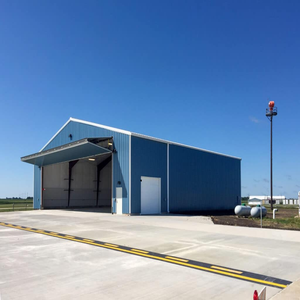
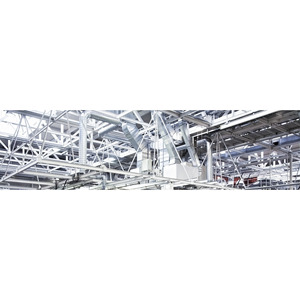
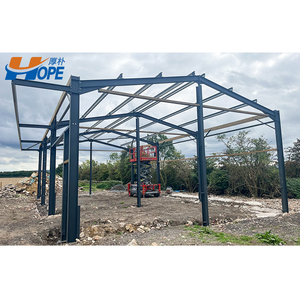
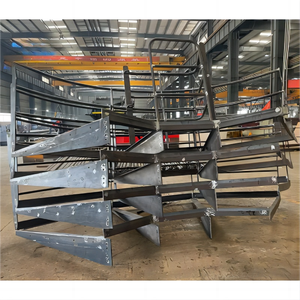
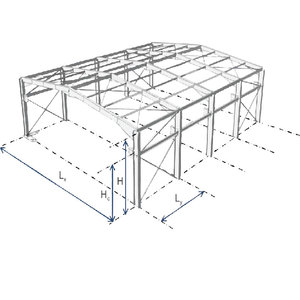
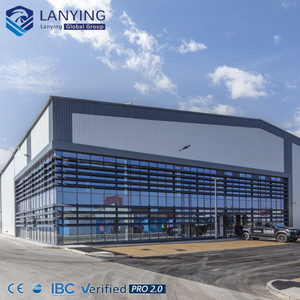
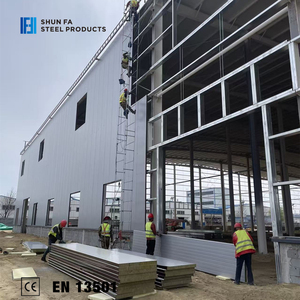
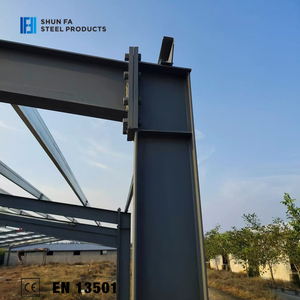
The global construction landscape is undergoing a paradigm shift towards off-site pre-fabrication, industrial modularization, and sustainable structural steel engineering. When evaluating options from a China Best Steel Structure Factory & Supplier, international EPC contractors, developers, and commercial procurement leaders must navigate complex structural specifications, material yield strengths, coating durability standards, and international building codes (such as AISC 360, EN 1993, and GB/T 50017).
China has solidified its position as the world leader in structural steel manufacturing, accounting for over 50% of global crude steel capacity and pioneering robotic welding automation, Building Information Modeling (BIM Level 3), and CNC plasma cut precision under 1 millimeter tolerances. This whitepaper analyzes critical technical criteria, material supply chain dynamics, engineering innovations, and cost-efficiency benchmarks for procuring structural steel buildings.
Utilizing high-precision CNC laser cutters and automated 6-axis welding robots to maintain tolerances under 1 mm, eliminating dimensional mismatch during field assembly.
Multi-layer protective coatings including Sa 2.5 shot blasting, hot-dip galvanizing (up to 600 g/m²), and high-durability epoxy polyurethane paint systems for harsh C4/C5 marine environments.
Over 80% of structural pre-assembly is performed within the factory environment. Pre-fitted modules enable fast 7–10 day site installation cycles with minimal labor overhead.
Strict non-destructive testing (NDT), including Ultrasonic (UT) and Magnetic Particle (MT) inspection on 100% of critical structural welds under ISO 3834-2 standards.
As corporate climate directives intensify and real estate development costs rise, structural engineering trends are steering global buyers toward specialized steel suppliers in China capable of delivering high-performance, sustainable, and intelligent building frames. Strategic procurement directors should align their specifications with four major macro-trends:
The construction sector is responsible for nearly 39% of global energy-related carbon emissions. Leading Chinese steel fabricators are transitioning to Electric Arc Furnaces (EAF) powered by renewable energy grids and sourcing low-carbon scrap steel. Furthermore, sandwich panels utilizing zero-ODP (Ozone Depletion Potential) Polyisocyanurate (PIR) and Polyurethane (PUF) cores deliver high thermal insulation performance (R-25 values), reducing operational HVAC power consumption by up to 30% over the building life cycle.
Modern Pre-Engineered Buildings (PEB) are no longer built from two-dimensional CAD blueprints. The integration of 3D Tekla Structures and BIM (Building Information Modeling) Level 3 workflows enables seamless digital data transfer directly to CNC automated beam-drilling lines, cold-roll framing machines, and plasma cutters. This digital twin continuity eliminates field adjustments, clashes, and material wastage, lowering total cost of ownership (TCO).
Specifying high-strength Q355B or Q355D steel (yielding 355 MPa strength) over standard Q235B steel allows structural engineers to reduce total steel weight by 12% to 18% without reducing load-bearing capacity. This significantly reduces ocean freight container shipping costs and foundation concrete pile requirements.
Industrial operations in coastal areas, chemical refining plants, or high-humidity regions require rigorous surface protection. The industry standard has advanced from basic alkyd primers to multi-tiered protective systems:
To assist procurement managers in financial and operational evaluation, the following matrix contrasts factory-fabricated PEB frameworks with traditional on-site fabricated steel structural systems:
| Performance & Financial Criteria | Pre-Engineered Steel Building (PEB) | Traditional Site-Built Structural Steel |
|---|---|---|
| Fabrication Precision | CNC Controlled (<1.0 mm) | Manual Site-Welded (Varies >5.0 mm) |
| On-Site Erection Speed | 7 to 10 Days Assembly | 3 to 6 Months Field Fabrication |
| Structural Member Design | Tapered H-Beams (Optimized stress profile) | Uniform Hot-Rolled Beams (Heavy weight) |
| Quality Verification | 100% Factory NDT & ISO Lab Tested | Visual Field Weld Inspection |
| Material Waste & Scrap Ratio | < 2% Off-Cut Scrap | 10% to 15% Field Scrap Rate |
| Earthquake & Seismic Load | High Flexibility (Zone 8+ Compliant) | Rigid Framing (Prone to joint shear) |
| Total Procurement Cost | 20% - 30% Cost Savings | High Labor & Extended Overhead Cost |
A reputable Chinese steel structure manufacturer adheres to international structural welding and material quality control protocols. When inspecting factory operations, verifying the following certifications and test procedures ensures project reliability:
Welding represents the single most critical failure point in structural steel engineering. Full penetration butt welds on primary structural columns and crane beams undergo Ultrasonic Testing (UT) in accordance with AWS D1.1 (American Welding Society) or EN 1090-2 (Execution Class EX3). Filament fillet welds receive Magnetic Particle Testing (MT) to detect surface micro-fissures.
To eliminate foundation installation misalignment, primary columns are manufactured with precision-drilled heavy baseplates. Pre-assembled steel anchor templates are supplied to the site foundation crew prior to concrete pouring, guaranteeing exact centerline alignment with 0.5 mm tolerances.
Efficient freight engineering is vital for global B2B procurement. Primary frame members, secondary C/Z purlins, and wall/roof cladding sandwich panels are bundled with protective structural foam spacers, edge guards, and waterproof wrapping.
Get in touch with our senior structural engineering team today to receive a comprehensive CAD design consultation, bill of materials (BOM) estimation, and competitive factory quotation.